Contents "The internationalist proletarian" n.18
ENERGY SUPPLY SPASMS, TRADE WAR, DEBT, AND OVERPRODUCTION
Oil price adjustments
We concluded the previous issue of the magazine just when the US and Iran agreed to a ceasefire, which allowed the US to avoid either carrying out its major nuclear threat against Iran or being left completely empty-handed.
As we’ve seen since then, every time a possible solution to the conflict emerges, the price of oil begins to fall. And the price of oil is precisely the economic reason that pushed the US into the conflict and that demands that it remain actively involved.
Oil prices fell in early April following the announcement of the ceasefire. Immediately afterward, the US announced that it would impose a blockade of the strait, and oil prices rose again. Iran announced that it considered the strait reopened, and oil prices fell. It took no time for the US to fire on two Iranian ships, and oil prices rose once more.
The most telling episode in this regard occurred in June when the US and Iran signed an agreement intended to end the conflict: “Brent (…) stood at around $78 per barrel, while US West Texas crude fell to around $74.” (Expansión, 19-06-2026). This agreement called for a 60-day period to negotiate the remaining details, during which the sanctions against Iran would be lifted. But when “The US Department of the Treasury issued a license to allow the sale of Iranian oil for a total of 60 days (…) Brent (…) fell more than 3%, to around $77 per barrel, its lowest level since early March.” (Expansión, 23-06-2026). Brent continued to fall, reaching $71 per barrel on July 6 on the futures market. With the price at $71 — even before traffic through the Strait of Hormuz had returned to normal and the SHOCK to the overall flow of crude oil and refined products had eased — it was clear that once these two things happened, prices would return to a level unsustainable for the US That same day, the US threatened to destroy Iran’s energy infrastructure, and on July 7, at the same time that licenses for Iranian oil were revoked: “US Central Command (CENTCOM) confirmed that it had bombed more than 80 targets along the Iranian coast, destroying air defense systems, radars, drone depots, and more than 60 speedboats belonging to the Revolutionary Guard. Iran retaliated by launching ballistic missiles at US bases in Bahrain and Kuwait.” (Expansión, 09-07-2026).
The announcement (later withdrawn) by the US that it would impose “a 20% toll for crossing the Strait of Hormuz” (Expansión, 14-07-2026) drove the price up to more than $80 per barrel, but it took the Houthis’ attacks on Saudi ships in the Red Sea in late July — and their repeat attacks in September — to push the price of oil to $100.
Since then, oil prices have remained high amid successive escalations of the military conflict, primarily in the Strait of Hormuz and also in Bab el-Mandeb; however, they have not consistently surged well above $100 per barrel, due to: a contraction in demand (2.5 million fewer barrels per day, Expansión, 12-06-2026), increased production from other oil-producing countries (the US and Canada, but especially Brazil and Guyana, at around 1 million barrels per day), and the release of part of the reserves — “The IEA reported yesterday that 325 million barrels (…) of the 400 million promised by the G-7 countries in March have been released” (La Vanguardia, 04-10-2026) — , the redirection through other routes — “nearly 40% of the region’s oil exports have sought alternative routes to the Strait of Hormuz” (Expansión, 09-10-2026) — and the actual volume of traffic passing through the Strait of Hormuz: “The shuttling has been ongoing for months, but tracking how much oil those ‘dark’ ships are moving is a challenge for traders and analysts alike because vessels are protecting themselves by giving little clue about their locations.” (Bloomberg, 16-08-2026).
IEA projections: overproduction will stay
The slowdown caused by the ELECTROSHOCK delivered by the US military intervention has been significant, but it has not resolved the problem of excess crude oil production capacity: “The Agency forecasts that global demand for crude oil will increase by 2.4 million barrels per day in 2027, reaching 105.7 million barrels per day, but supply will rebound much more strongly — barring any problems — since this year’s sharp drop in supply will be followed by an even more intense rebound next year, when 8.3 million barrels per day will be added, bringing the total to 110.3 million barrels. This will result in a historic surplus of 4.6 million barrels per day.” (Expansión, 13-08-2026).
Only by forcibly keeping part of the existing overcapacity idle can the excess be prevented from prevailing in the form of a price drop (we have explained in detail in “The Internationalist Proletarian” No. 17, p. 19, how the price threshold that compels the US to intervene militarily is established). At the same time, keeping demand higher than supply in order to maintain high prices ultimately leads to increased production, thereby undermining the very basis for maintaining those high prices. As Marx explains in “Value, Price, and Profit” (1865), in his critique of Weston: “It only expressed his perplexity at accounting for the laws by which an increase of demand produces an increase of supply, instead of an ultimate rise of market prices.” (Value, Price, and Profit, K. Marx, 1865).
And while it is true that oil can be monopolized and is subject to the laws of ground rent that hinder, complicate, and slow down this process, it is also true that the ability to exercise monopolistic control is undermined by the differing interests of oil-producing countries and by the rise of non-fossil fuel energy sources.
OPEC: a waning monopoly
OPEC was created in 1960 to challenge the dominance of the “Seven Sisters,” which came to control more than 50% of the global oil market share in the 1970s. Its monopoly power has been substantially diminished since then, leading to the creation of OPEC+ in 2016 to try to counteract the drop in prices caused by increased US shale oil production.
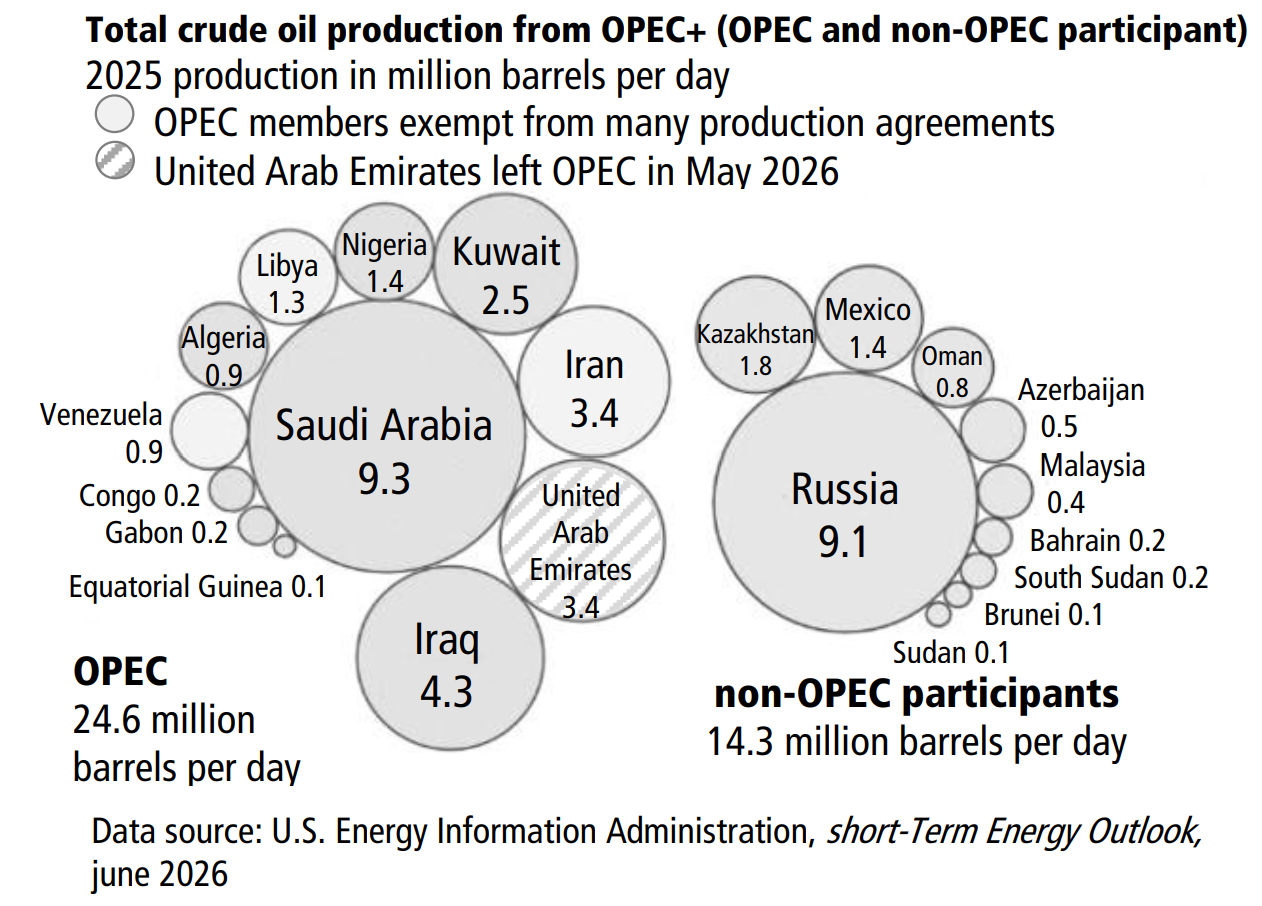
This situation has ultimately led to the United Arab Emirates' withdrawal from OPEC: “the world’s sixth-largest exporter of crude oil and refined products and the third-largest within the cartel, behind only Saudi Arabia and Iraq, accounting for 12% of OPEC’s crude oil production” (Expansión, 29-04-2026), as a result, control over production has been further reduced: “OPEC (including the UAE) produced an estimated 28.0 million b/d of crude oil in 2025, 35% of total world crude oil production that year. Without the UAE’s contribution, the group’s share of world total crude oil production would have been 31% in 2025. (…) Production from OPEC+ countries made up about 46% of global crude oil production in 2025; without the UAE, the OPEC+ portion would have been closer to 42%.” (Energy Information Administration, 07-10-2026).
The UAE’s withdrawal is due to the agreed-upon production cuts, which the country refuses to comply with. However, despite the current desire to reduce the cuts and increase production, the reality is that US pressure in the Strait of Hormuz is forcibly keeping OPEC countries’ production low: “According to the latest figures published by the organization [OPEC], the group’s total production in August stood at 24 million barrels per day — a level that, while up 1.46% from the previous month, is 15% lower than in January, just before the US and Israeli attacks on Iran that sparked the war” (El País, 04-10-2026).
And yet, this does not mean that the situation is entirely negative for everyone involved. The UAE and Saudi Arabia have oil pipelines that allow them to bypass the Strait of Hormuz entirely or partially. For this reason, the UAE believes that now is the right time to leave OPEC. The desire of others to expand production and break free from the externally imposed standstill is obvious: “Dubai is already planning the construction of a new port and a container terminal on the east coast of the United Arab Emirates (UAE).” (Expansión, 14-07-2026). For its part, as we saw in “The Internationalist Proletarian” No.17, depending on the price of oil, the Saudi production cut could be counterbalanced by a rise in that price — as has indeed been the case: “Saudi Arabia’s revenue from oil exports jumped to a more than three-year high of $24.7 billion in the first full month of the war in the Middle East.” (Bloomberg, 25-05-2026). At least until the Houthis resumed their intense attacks on Saudi Arabia in September, forcing the closure of its terminal. In any case, “although attacks by Yemen’s Houthi rebels on Saudi facilities in the Red Sea caused a significant drop in exports — down to 3.5 million barrels per day — this situation appears to have been resolved, to the point that Riyadh is now pumping 6 million barrels, or 80% of its total capacity.” (Expansión, 18-10-2026).
The US and its allies in the Middle East
Saudi Arabia, in particular, maintains relations with China and France to reduce its dependence on the US, and is also interested in increasing oil production — a move that tends to drive prices to levels the US cannot afford. Although it openly participated in the joint attack with the US against Iran-linked targets in Iraq in July, the response from the representative of the ruling bourgeois faction in the US to the Saudi request for support against the Houthi attacks in September is highly telling: “‘[The Houthis] prefer that we not get involved and are letting most of the ships through. There’s only one country they’re not very happy with [Saudi Arabia], and we’ll take care of it.’ (…) In a previous meeting with US officials in Oman, the Yemeni rebels had assured Washington that they would not block the Red Sea for everyone — only for the Saudis.” (El País, 20-09-2026).
This is clear evidence that the US is willing to sacrifice its allies in the region and that, in part, its actions are aimed at putting pressure on them, trying to keep them under its control so it can use them, and ensuring they do not serve as bases of support for other imperialist powers.
On August 18, the chief clown of the US ruling faction “threatened yesterday to bomb Oman, a traditional ally, if it interferes with talks with Iran to reopen the Strait of Hormuz” (La Vanguardia, 18-08-2026) and the next day “announced that he would declare the Strait of Hormuz ‘US territory’ once he has defeated the Iranian regime.” (Expansión, 19-08-2026).
And this is notwithstanding the fact that these imperialist outbursts are interspersed with promises of future support, such as the 30-year nuclear agreement signed on July 22 by the US Secretary of Energy and the Saudi Minister of Energy, on the condition that Saudi Arabia recognize Israel — an agreement that “gives US companies exclusive rights to develop nuclear infrastructure in Saudi Arabia and bars foreign companies from doing so.” (Expansión, 23-07-2026). This agreement has been submitted to the US Congress and will be automatically approved on October 24 unless it is expressly repealed. This is an attempt by the US to entice Saudi Arabia with a carrot and try to prevent it from knocking on other doors. However, on the one hand, what has come to light is that “the construction of a uranium enrichment plant is contingent upon the joint approval of the US and Saudi Arabian governments.” (Expansión, 23-07-2026) and, on the other hand, we must not forget that the nuclear program for which Iran is being bombed began with the export of nuclear material by the US (1967), the creation of a program at MIT (1974) to train Iranian nuclear engineers, and permission to purchase and operate a processing facility (1976). When Iran tried to play an independent imperialist role, US and European imperialist powers took action to overthrow the Shah, and when the creature they themselves had installed showed that it would follow the same path (determined by the development of the productive forces), they tried to block the progress of this plan.
The other bait the US has offered Saudi Arabia has been the approval of the sale of the most advanced F-35 fighter jets, although this must still be approved by Congress, where there is reluctance both because of the fact that the technology provided to Saudi Arabia would be on par with that provided to Israel and because of Saudi Arabia’s ties to China, which could allow access to sensitive military technology. Even if authorization is granted, it could still take years for the delivery to take place.
Oil refining crisis
Crude oil must be refined before it can be used. According to the Energy Information Administration (EIA, 20-06-2024), the final volume of refined products from a barrel of crude oil is greater than that barrel due to the added products and is distributed in the following proportions: gasoline (50%), distillates such as diesel and heating oil (25%), kerosene and jet fuel (9%), coke (4%), still gas (3%), hydrocarbon gas liquids (3%), asphalt (2%), petrochemical feedstocks for plastics (1%), heavy fuels and residual fuel oil (1%), lubricants (1%), and others such as waxes, solvents, etc. (1%).
As we discussed in “The Internationalist Proletarian” No. 17 (April 2026, p. 22), 20 million barrels of oil passed through the Strait of Hormuz, of which 15 million were crude oil and condensates, while the remaining 5 million were refined products.
While the importance of crude oil itself and the impact of taking 15 million barrels per day out of circulation are undeniable, we have seen that this has been offset to some extent by prior overcapacity, increased production from other countries, the release of reserves, and the covert passage through the strait despite the apparent blockade. But this blockade also affected refined products, putting upward pressure not only on the price of oil in general but also on the price of refined petroleum products in particular: primarily gasoline and diesel. And it is the price of these products — not simply the price of crude oil — that has an immediate impact on inflation.
According to EIA data (01-11-2025), global refining capacity of 102.1 million barrels per day was distributed as follows (in millions of barrels per day and as a percentage): China 18.50 (18.1), United States 18.40 (18.0), Russia 5.40 (5.3), India 5.00 (4.9), South Korea 3.30 (3.2), Saudi Arabia 3.29 (3.2), Japan 3.10 (3.0), Brazil 2.4 (2.4), Iran 2.24 (2.2), Venezuela 2.15 (2.1), Germany 2.08 (2.0), Italy 1.80 (1.8), Mexico 1.78 (1.7), Canada 1.72 (1.7), Spain 1.50 (1.5), Kuwait 1.45 (1.4), Singapore 1.40 (1.4), Indonesia 1.25 (1.2), Thailand 1.25 (1.2), Iraq 1.24 (1.2), Rest of the world 22.8 (22.4).
China has kept its refining capacity essentially intact, as has the United States. India suffered a temporary setback due to a shortage of crude oil, which it replaced with Russian crude (whose consumption had temporarily declined) and Venezuelan crude (confirming the US plan to find an outlet for this oil amid the turmoil in the Middle East). Saudi Arabia was able to continue exporting its refined products via the Red Sea, and, following the Houthi attacks, is now doing so with greater difficulty by land and through the Suez Canal. Japan and South Korea also suffered an initial impact, which they have been able to offset only partially because their refineries are not adapted to US light crude. Iran, Kuwait and Iraq have had to limit their refining to what can be transported by land and through the strait via ghost ships.
With the US and Israeli military intervention against Iran, Russia initially saw a surge in revenue from the sale of oil (to Asia, especially China and India, but also the Philippines, Japan, etc.), natural gas (especially to Europe), coal, and fertilizer (to Asia), demonstrating how the US can only act in its own interest by further strengthening its rivals. And this is despite the fact that the Russian State has made progress in reducing its dependence on hydrocarbons — “revenues from oil and natural gas exports have fallen to 19.7%” (La Vanguardia, 19-07-2026). However, the intensification of the Ukrainian offensive in September 2026 has dealt a severe blow to Russia’s refining capacity: “Following a wave of attacks, EA Analytics estimated that Russia’s crude-processing rates were running at 3.6 million barrels a day in July, about a third below the seasonal norm. Since then, Kyiv has intensified strikes, hitting five processors last week and at least two more this week.” (Bloomberg, 12-08-2026).
Russia has been forced to import gasoline from India, “It’s the first time Moscow has imported the motor fuel from the South Asian nation, according to Kpler data” (Bloomberg, 12-08-2026). This impact is being felt throughout Central Asia: “Russia’s exports of jet fuel by rail to Central Asia and Afghanistan plummeted by more than 92% in June (…) local companies [in Kyrgyzstan] are seeking supplies from Azerbaijan, China, Belarus, and Turkmenistan, and ‘prices have doubled.’ While in the spring the cost of a metric ton of gasoline was $700 and diesel was $800, prices have now risen to $1,800 and as high as $1,900, respectively.” (La Vanguardia, 22-07-2026), and across Asia in general, “Chinese fuel exporters have canceled in recent days some shipments of petroleum products scheduled for export in October” (Expansión, 02-10-2026). In the context described above, where refining capacity has been compromised, this is the straw that broke the camel's back and is affecting the entire capitalist world: “Diesel currently trades at a premium of around $70 a barrel to crude, close to last week’s record high of $90 and many times larger than typical levels of about $20 a barrel” (Financial Times, 07-08-2026).
This has put pressure on inflation worldwide and, in particular, in the US. The plan of the US ruling faction was to keep oil prices moderately high while at the same time keeping the refining differential at limited levels to moderate the ultimate impact on inflation, all while achieving their goal of finding a market for their own oil and Venezuelan oil (“officialism”, now a US trading partner, has ceded the exploitation of 20% of Venezuela’s oil reserves — 17 wells — to the US).
The price of refined products (gasoline and diesel) is what the “consumer” pays. And this “consumer” consists of the proletariat but, above all, of the petty and middle bourgeoisie as well as the labor aristocracy. In other words, the electoral base that propelled the faction advocating for walled-in withdrawal 2.0 to power in the last elections. And this electoral base is being suffocated by the combined effect of the war initiated/provoked in Ukraine by the previous ruling faction, which favored diplomatic-military expansion, and by the war initiated by the current ruling faction, which favors walled-in withdrawal — although their perception of causality is directed toward this second faction. “The price of a gallon of diesel has skyrocketed from around $3.76 — the price it was at before the coordinated attack launched by the United States and Iran against Iraq on February 28 — to a record high of $6.53 per gallon by the end of September.” (Expansión, 07-10-2026). The midterm elections are approaching, and the ruling faction in the US is nervous about the consequences of its own actions.
The series of measures it is being forced to take range from domestic populism to the global geostrategic sphere. On the domestic electoral scene, the ruling faction has lifted legal restrictions on the purchase of “red diesel” (conventional diesel fuel that is tax-free and artificially dyed red to prevent fraudulent use) and has temporarily deferred “payment of the federal excise tax applicable to fuel consumed between October 5 and December 31, 2026, which would be paid in 2027 without interest or penalties.” (Expansión, 07-10-2026), in addition to promising a $5,000 check to all US citizens if they win the midterm elections.
Faced with the US threat to impose a ban on its exports of refined products, the G-7 “decided yesterday to release up to 100 million barrels of strategic reserves of diesel and crude oil over the next four months (…) there will be a release of distillates concentrated in the first 20 days” (La Vanguardia, 03-10-2026).
Finally, the US has reached an agreement with Russia for it to supply “’(…) more than 300,000 metric tons of diesel fuel to the US and global markets immediately,” the US president announced on his social media platform, Truth Social. (…) The agreement reached with his Russian counterpart calls for the distribution of an additional 500,000 metric tons of Russian diesel to the global market during the month of November and 1,000,000 metric tons ‘immediately thereafter’. ’In addition, depending on the status of its diesel refineries, Russia will shortly deliver 3,000,000 metric tons of diesel,’ he added. (…) ‘Lowering prices for Americans — especially for our farmers, ranchers, and truck drivers — is my top priority’, the US president stated.” (Expansión, 07-10-2026).
And the US has not only reached this agreement but has also pressured Ukraine to stop attacking Russian refineries, cut off access to Starshield (a US government-controlled version of Starlink used by the Ukrainian military) for a day, and not warned Ukraine about the latest Russian missile launches. This action is an attack on Ukrainian capitalism but, above all, on European imperialism. In this way, the US demonstrates once again that it is willing to sacrifice its allies and that, in fact, it cannot do otherwise in the midst of its zigzagging decline.
The narrow horizon of the anarchy of production
The immediate situation resulting from the US attack on Iran has sent freight rates soaring: “Tanker rates reached an all-time high of $1 million per day for voyages to and from the Persian Gulf.” (Expansión, 22-09-2026). And even though everyone knows that it is only through this SHOCK that oil is kept at a price acceptable to the industry — given the current volume of supply and demand, coupled with the emergence of other energy sources — the truth is that, here and now, it is a lucrative business, and this is the logic that inevitably governs a mode of production based on PROFIT. Everyone is now rushing to buy newly built or used oil tankers (with a preference for the latter): “The price of used oil tankers has skyrocketed since the closure of the Strait of Hormuz, and some used vessels are now valued higher than new ones, because it would take two or three years to build a new ship.” (El País, 07-09-2026).
“Trafigura is preparing to take one of its companies public for the first time by listing its supertanker division, with which it aims to capitalize on the record prices driven by the crisis in the Persian Gulf. The group announced yesterday that it plans to raise approximately $500 million (435 million euros) through a private placement of Volare Shipping, ahead of its debut on the Oslo Stock Exchange in early October. The funds will be invested in expanding Volare’s supertanker fleet, which will be chartered on a spot basis.” (Expansión, 22-09-2026).
And although “shipowners had been expecting to enter a down cycle this year due to a high number of new ships entering the market (…) Equity investments in listed shipping companies by US and UK investment firms were at similar levels to last year, when they reached a 20-year high.” (Financial Times, 31-08-2026).
And this not only highlights the capitalist system’s inability to plan for the long term in general — let alone to plan for the satisfaction of human needs — as it inevitably succumbs, always and everywhere, to the demands of immediate profit. It also highlights the material necessity of repeatedly inflicting these ELECTROSHOCKS, PARALYSIS and DESTRUCTION on global capitalist production and circulation as the only mechanism capable of mitigating the tendency toward relative overproduction of capital and the deflation that stifles the rate of profit.
As we have known for more than 150 years: “And how does the bourgeoisie get over these crises? On the one hand by enforced DESTRUCTION of a mass of productive forces; on the other, by the CONQUEST of new markets, and by the more thorough EXPLOITATION of the old ones. That is to say, by paving the way for more extensive and more destructive crises, and by diminishing the means whereby crises are prevented.” (Manifesto of the Communist Party,1848).
Energy overproduction
In March, several African countries — including Tanzania, Namibia, Zambia, Mozambique, and Uganda (which rely on Middle Eastern oil as their primary source) — began receiving reports of delays or non-delivery of oil shipments. The previously agreed-upon prices were not profitable, and the traders stopped delivering the oil. This has forced these countries to rely on a single company to ensure their supply: the Vitol Group. Significantly, Vitol was one of the traders that was unable to deliver the supply… while prices remained at their previous level. “Vitol now has exclusive agreements, either directly or indirectly, to supply fuel to at least five countries, with a combined population of roughly 180 million people”. (Bloomberg, 17-08-2026).
This control over energy supplies at the imperialist level can only accelerate the adoption of other energy sources and attract other imperialist powers to present themselves as alternatives. European imperialism is reviving old plans (thwarted by the outbreak of the so-called “Arab Spring”) to electrify North Africa: “The Middle East and North Africa region has an estimated renewable energy generation potential of more than 2,300 GW, which is more than double the current installed capacity of the entire European Union. Furthermore, the costs of solar and wind power generation are between 30% and 40% lower than in the EU. (…) The Mediterranean Renewable Energy Pact will not only provide an additional source of renewable energy but will also give European industry access to a market with enormous potential. By developing projects that can be financed under the new strategic partnership, EU companies will sell their parts, solar panels, wind power components, and electrolyzers, among other products, generating sales that will strengthen their competitiveness.” (Expansión, 10-06-2026).
The capitalist world operates entirely within the framework analyzed by Lenin in “Imperialism, the Highest Stage of Capitalism” (1916): “The export of capital thus becomes a means of encouraging the export of commodities. (…) report from the Austro-Hungarian Consul at San-Paulo (Brazil) states: ‘The Brazilian railways are being built chiefly by French, Belgian, British and German capital. In the financial operations connected with the construction of these railways the countries involved stipulate for orders for the necessary railway materials.’”.
Regardless of European imperialism's plans, it is the low prices of solar panels that are causing them to spread like wildfire: “Africa’s adoption of solar panels as an electricity source will rise 45% this year as the use of the clean power technology broadens across the continent, Ember projects. (...) The $2.4 billion spent across Africa on panels in the year through June is equivalent to what it would have traditionally cost to run diesel generators for three months, Ember said. (...) Even though Ember estimates that 36 of Africa’s 54 countries will install record amounts of solar in 2026, South Africa will remain the biggest buyer, with 3.3 gigawatts expected to be added.” (Bloomberg, 27-08-2026).
Not only in Africa, the installation of solar panels just keeps increasing: “By the end of 2025, that capacity totaled nearly 1.2 terawatts worldwide, according to the World Energy Statistical Review published by the Energy Institute (…) At the beginning of the millennium, solar panels cost between $5 and $6 per watt of generating capacity. Today, they sell for about 12 cents per watt” (Expansión, 26-09-2026). And this installed excess production capacity poses serious problems for energy companies, as well as grave logistical and industrial challenges, within a commodity-based society. Large power plants remain necessary to maintain the stability of the system and during prolonged periods without sunlight, but under capitalism, these plants can only exist if they are profitable, and the flood of solar energy is wreaking havoc on that profitability.
One of the main arguments in favor of fossil fuels is the difficulty of storing excess energy from sources such as wind and solar power — which depend on natural conditions — in sufficient quantities and with acceptable charging times. Let’s examine the current state of affairs through three very significant reports:
- “The Chinese company CATL, (…) unveiled yesterday a lithium iron phosphate (LFP) battery capable of charging from 10% to 98% in just 6.5 minutes — slightly longer than it takes to fill the gas tank of a combustion-engine car. (…) It has also developed a battery capable of providing up to 1,500 kilometers of driving range on a single charge.” (Expansión, 22-04-2026).
- “The Chinese group [CATL], which controls 37 per cent of the market for EV batteries and 22 per cent for energy storage systems in power grids and data centres, has deployed batteries on about 900 ships, mostly smaller craft operating close to the Chinese coastline, at ports or in rivers.” (Financial Times, 06-04-2026).
- “(…) an aircraft with a 32-meter wingspan, a takeoff weight of more than 11 metric tons, and the dimensions of a regional turboprop took off, flew for 27 minutes, and landed without burning a single liter of kerosene. (…) cost of the flight: about five dollars in electricity (…) the company estimates that the ES-30 could reduce operating costs by more than 40%” (La Vanguardia, 06-09-2026).
The production volcano
The SHOCK in oil prices pulled Chinese capitalism out of the deflation it was experiencing in April:
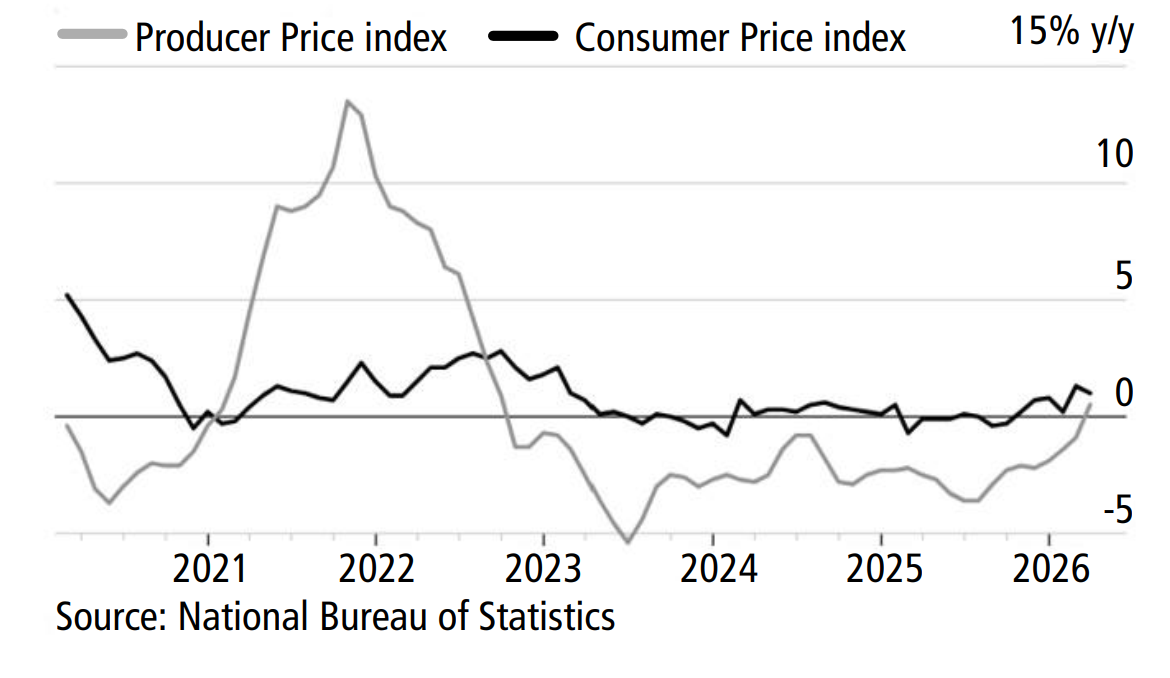
However, although the immediate response to this SHOCK is a rise in industrial prices, the reality is that this does not alter the underlying cause of overproduction that was driving prices down — that is, excess production capacity. This manifests itself in increased production coupled with a decline in retail sales, driving a continued rise in exports. If exports in metric tons (second graph) increase, they increase even more when measured in dollars (third graph), due to the rising cost of technological products.
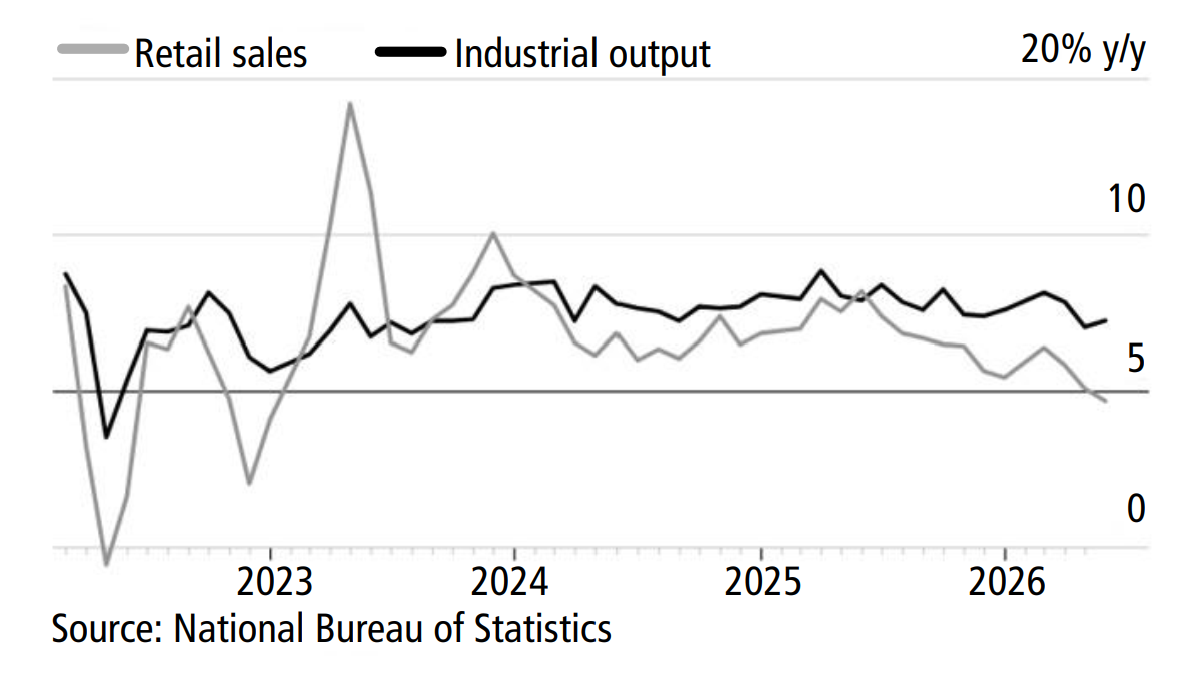
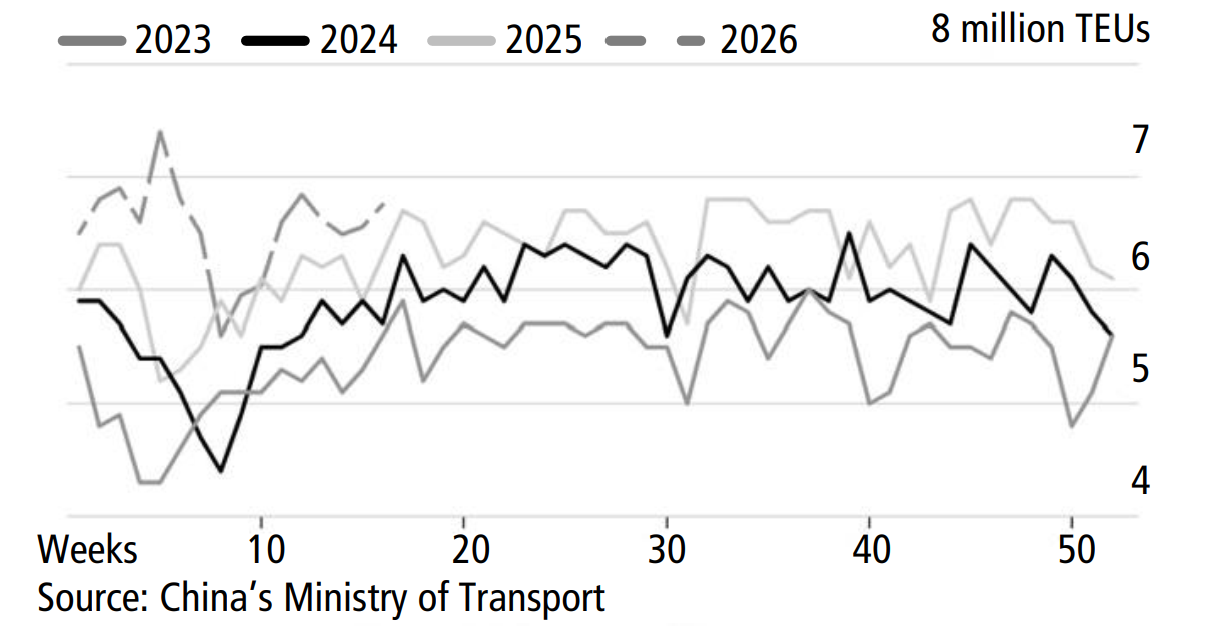
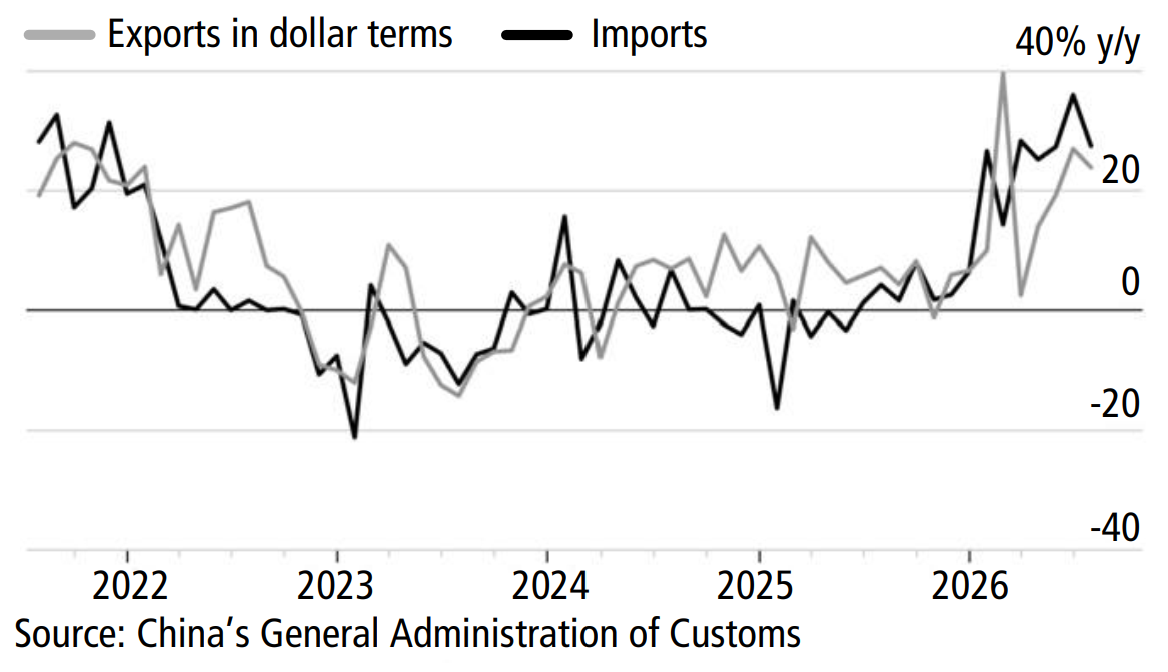
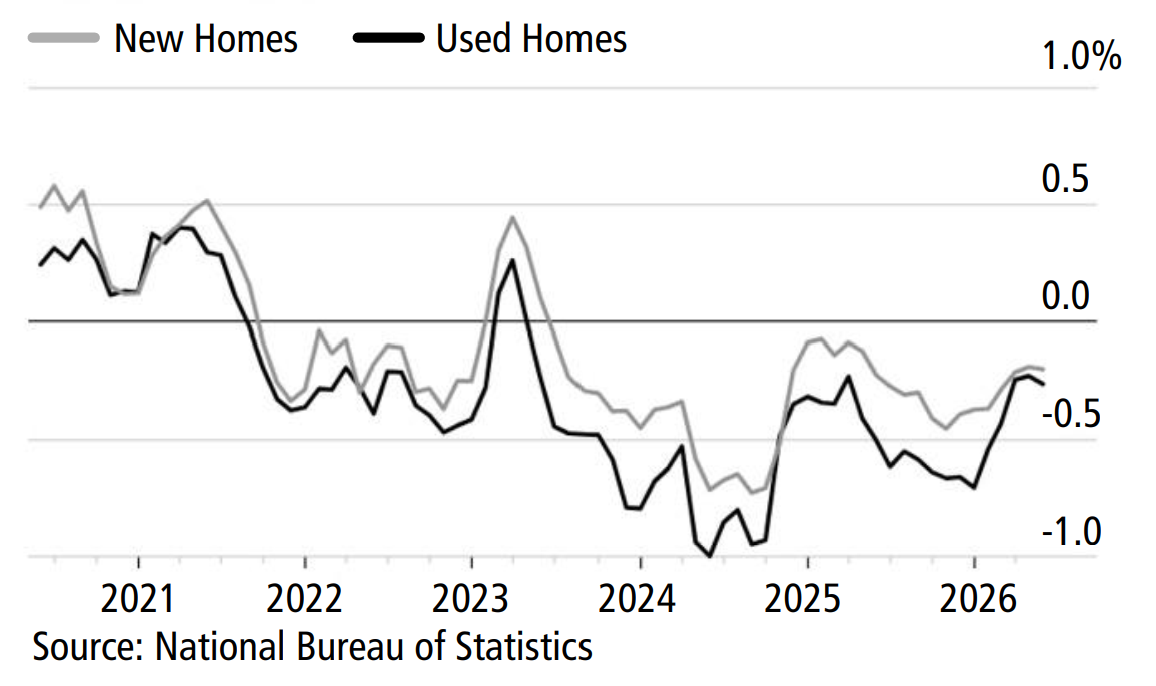
Another manifestation of overproduction is the unstoppable and continuous decline in housing prices in China. The conviction of Evergrande’s founder may serve as an exemplary punishment for a market’s puppet, but it does not solve the real problem.
Automotive
The automotive sector is a clear example of the unchecked race to increase production capacity in China: “As competition grows and margins get squeezed, the use of artificial intelligence could set a new industry standard of just 18 months for bringing a brand new model to market, according to an estimate from car designer IAT Automobile Technology and China’s Association of Automobile Manufacturers. That’s down from the current pace of around two years and compares with roughly three to five years for legacy foreign competitors.” (Bloomberg, 01-09-2026). Even the Chinese capitalist State is trying to slow down this process by artificially increasing the required test mileage for bringing new models to market.
For its part, Toyota has announced that “it will invest $6.4 billion each year until it deploys a fleet of 400,000 humanoid robots (…) that, thanks to artificial intelligence, will learn from the most experienced workers until they replace them.” (La Vanguardia, 22-09-2026), increasing market pressure through the race for accumulation for accumulation's sake, via production for production's sake.
In Europe and the US, more and more automakers are being forced to share plants and technology with Chinese automakers and battery companies, to the point that Ford itself has been declared “unreliable” by the US government: “US Secretary of Transportation Sean P. Duffy yesterday criticized the partnership Ford entered into in July with the Chinese automaker Geely for the joint operation of its factory in Almussafes (Valencia). This deal will lead to the creation next year of a joint venture in which Ford will hold a 66% stake and Geely a 34% stake (…) It also notes that Ford continues to use technology licensed from the Chinese battery manufacturer CATL — which appears on the Department of Defense’s list of prohibited companies — at its Michigan plant.” (Expansión, 10-09-2026). Volkswagen and Stellantis have also followed this approach in Sagunto and Zaragoza, respectively: “A 49% stake in the German Volkswagen Group’s car battery factory (…) has been sold to the Chinese group Gotion. (…) The largest project is the battery gigafactory that Stellantis and CATL are building in Zaragoza, with a projected investment of up to 4.1 billion euros.” (La Vanguardia, 29-09-2026).
Trade War: China vs the EU
Competition between Chinese imperialism and European imperialism has intensified over the past decade. It now “competes directly with the eurozone in nearly 40 percent of the sectors in which Europe has a comparative advantage, compared with about 25 percent at the beginning of this century.” (La Vanguardia, 20-08-2026), with Germany being the European country hardest hit by the impact “when the perspective widens to the top 100 Chinese export categories, Germany records 51 per cent export exposure” (Global Trade Alert, 17-12-2025). On the other hand, “the trade deficit with China now stands at 365,000 million euros, which amounts to a daily imbalance of 1,000 million euros.” (Expansión, 20-06-2026).
Faced with this increase in competition and the flood of Chinese goods and capital into Europe, European imperialism has launched a trade counteroffensive: “It has decided to impose across-the-board tariffs of 50% on all imports exceeding the annual quota of 18.3 million metric tons. (…) Furthermore, with the arrival of July, a three-euro tax also goes into effect on e-commerce packages valued at less than 150 euros, which until now had been exempt from tariffs.” (Expansión, 01-07-2026). In addition, “the European Commission announced yesterday that it is imposing a fine of 550 million euros on AliExpress for selling illegal products on its platform (…) The previous fines — on Temu (200 million euros) and X (120 million euros) — pale in comparison to AliExpress’s fine.” (Expansión, 21-07-2026).
European imperialism is also reforming its public procurement regulations by adding a “principle of European preference” to curb Chinese companies. “The public procurement system is very important because spending through competitive bidding accounts for approximately 20% of the European Union’s GDP, or about 3.7 trillion euros.” (Expansión, 09-09-2026).
For the time being, it seems that Chinese imperialism has agreed to slow down somewhat and give European imperialism a little breathing room, although the race for accumulation will ultimately prevail: “China has committed to curbing its exports of hybrid and plug-in hybrid vehicles to the European Union, with the goal of reducing those exports by about 50 percent, thereby easing the pressure on the European industry, which had accused the Asian country of unfair competition. (…) With regard to fully electric vehicles, (…) if Chinese companies decide to sell their products below these established limits — which are set based on European industry prices — customs authorities will impose severe tariffs that eliminate that price difference. (…) the EU has secured assurances that the licensing process for exports of rare earths and critical minerals to European companies — elements essential to numerous EU industries — will be streamlined.” (Expansión, 10-10-2026).
Meanwhile, in May, the US raised tariffs on European cars from 15% to 25%. The trade war is developing in all directions.
The US against the world (and against itself)
As part of the process of US decline, some factions of the bourgeoisie are tripping up others. After the US’s grand “liberation” maneuver — imposing tariffs on the entire world — was overturned by the US Supreme Court itself, the State has had to begin refunding the money it collected. So far, “it has processed refunds totaling about $100 billion (nearly 87 billion euros) to date (…) This represents about 60% of the annulled tariffs.” (Expansión, 06-08-2026).
In July, the US ruling party came up with a third excuse to keep global tariffs at around 10 percent. Countries considered to have some form of regulation against forced labor (the EU, Canada, Mexico, Ecuador, Indonesia, Pakistan, Argentina, Bangladesh, Cambodia, Ecuador, El Salvador, Guatemala, Malaysia, Taiwan, the United Kingdom, India, Honduras, Jordan, and Sri Lanka are on the list) will be subject to a 10% tariff, while the rest will be subject to a 12.5% tariff.
There has been widespread outrage among all exploiters around the world, when the harsh reality is that the slavery of wage labor — on which everyone’s profits are based — operates primarily on the basis of “free” labor, which is nothing more than forced labor, imposed by the social conditions of production and distribution under the capitalist mode of production.
We saw in “The Internationalist Proletarian” No. 17 that the US had been rolling back some tariffs in an effort to reduce their impact on food, clothing, etc. As recently as August, the US announced that for 90 days it “will allow the importation of up to 300,000 metric tons of ground beef outside the tariff quota without tariffs (…) committing to ensuring that this type of meat ‘is sold at 25% below current market prices.’” (Expansión, 22-08-2026). Also in August, the US imposed 100% tariffs on drones weighing more than 25 kg or with critical safety functions, and a 25% tariff on those that do not meet these conditions. The European Union, Japan, South Korea, Switzerland, Liechtenstein, and Taiwan will pay a 15% tariff. For the United Kingdom, the rate will be reduced to 10%.
As for the trade war with China, at the recent bilateral summit held in the US, US imperialism has had to acknowledge that it cannot bring Chinese imperialism to its knees in this arena. Both imperialist powers “have announced an agreement to cut their mutual tariffs by $60 billion (about 52.8 billion euros). (…) As part of the tariff reduction, the United States will lower tariffs on 77 groups of Chinese products, including household appliances, toys, Christmas items, baby products, kitchenware and utensils, blankets, thermoses, and fishing gear. For its part, China is reducing tariffs on 1,619 lines of US products ranging from coal to personal care products, including medical supplies and equipment such as MRI machines, medical instruments, surgical robots, hearing aids, and pacemakers.” (Expansión, 29-09-2026).
In its immediate context, in July the US expressed its opposition to renewing the USMCA with Canada and Mexico, although it will remain in effect until 2036. Immediately afterward, the US resumed its trade offensive against Canada. The turning point came with the Trans Mountain diversion to provide access to oil to the Pacific Ocean on Canadian territory (see “El Internationalist Proletarian” No.16, April 2025, p. 21) and to begin selling it to other countries. But critical minerals also play a role in the background. Canada actively produces 60 minerals and metals; it is the world’s leading producer of potash, the second-largest producer of uranium, the third-largest producer of palladium, controls the third-largest cobalt reserve, and is the fourth-largest producer of this material. And in June, Canada had the nerve to sign 13 new bilateral agreements with G7 powers, India, and Saudi Arabia — within the framework of the Alliance for Resilience and Critical Minerals Production — to finance mining projects worth $5 billion. The US was convinced that Canada was its appendix, but as the US has declined and the center of gravity of capitalism has shifted toward Asia, Canada has been forced to try to play an independent role, and the US has discovered the difficulties it faces in controlling it.
The 50% tariffs imposed by the US on Canadian products worth an estimated $20 billion (5% of Canadian exports to the US) have prompted Canada to impose reciprocal tariffs on 800 US products. The US response: “He issued a ban on imports of dairy products, alcoholic beverages, and motorcycles” (Expansión, 10-09-2026). But more importantly, they have pushed Canada into a closer alliance with European imperialism.
This imperialism, after having secured the free trade agreement with Mercosur, has signed an agreement with the Philippines: “renewed and advantageous access for European Union companies to a market of 113 million people, with the resulting reciprocity. The agreement reached will eliminate no less than 94% of all tariffs that the Southeast Asian country had imposed on trade with the EU — tariffs that covered 97% of all goods and services exchanged — thereby opening up a world of new possibilities.” (Expansión, 23-09-2026).
The South American bourgeoisie is also taking steps to expand its exports, although they do not yet play the main role: “Officials have said they hope to seal the terms of a trade deal with Canada by the end of 2026, while Mercosur and Japan in June officially launched negotiations for an economic partnership. Trade talks are also in progress with countries including the United Arab Emirates, India and Vietnam. Mercosur exports currently represent less than 20 per cent of combined GDP, according to analysts, far below the global average.” (Financial Times, 24-08-2026).
Growing debt of the capitalist world
The capitalist world's debt continues to rise, while the cost of financing that debt is also increasing.
The beginning of the war in the Strait of Hormuz took a toll on corporate bond issuance: “Issuers have had to pay more to place their bonds. So far this year, the average corporate risk premium in euros has risen 6.4% for the most creditworthy companies and 12% for those with lower creditworthiness.” (Expansión, 27-04-2026).
More and more capitalist countries have debt exceeding 100% of their GDP, including the United States, which, far from reducing its debt, sees it increase with every step it takes:
“The total liabilities of the US federal government have reached 40.047 trillion dollars (…) the administration’s spending exceeds its tax revenue by about two trillion dollars annually. Added to this is the major tax cut bill that Trump pushed through last year, which will very likely increase the annual deficit to over four trillion dollars over the next decade. (…) Currently, the federal government is spending more than one trillion dollars a year on interest payments — which are also on the rise — to finance its debt, and this already represents the second-largest spending category after Social Security.” (Expansión, 21-08-2026).
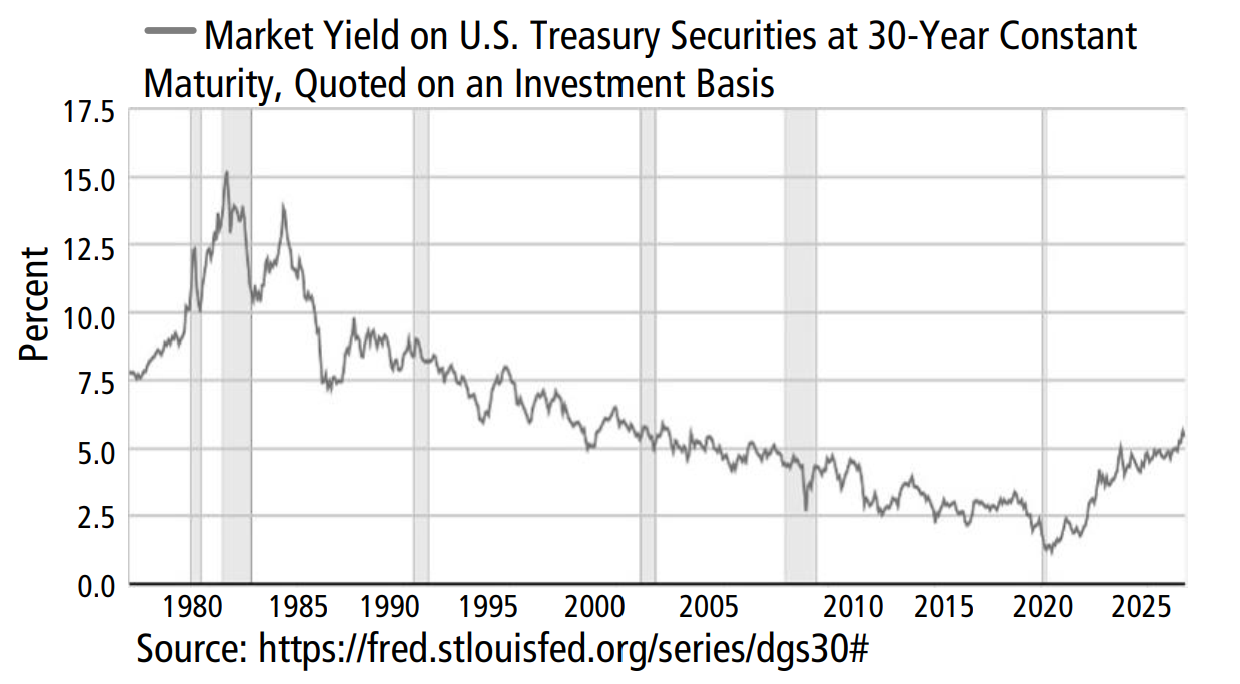
The size and trend of US debt partly explain the rise in US bond yields: “The 30-year yield reached almost 5.34 per cent on Tuesday, the highest level since 2007” (Financial Times, 19-08-2026).
But it's not just US bonds whose yields are rising: “The yield on the 10-year Spanish bond has surpassed 4%, and at 4.07% yesterday, it reached its highest level since January 2013, at the height of the euro crisis. The German bond is hovering around 2011 levels and yielding close to 3.6%; the Italian bond, at 4.5%, remains at levels last seen in 2023; and yields on U.K. and French bonds are extending their highs to levels last seen in 2007 and 2008, respectively. (…) The 10-year Japanese bond is offering its highest yield since 1996, at 3.06 percent.” (Expansión, 25-09-2026). These peaks were reached as part of the massive sale of bonds triggered by the rise in oil prices.
However, if we look at the trend in returns in other capitalist powers, we will see that the trend over the past four years has been upward.
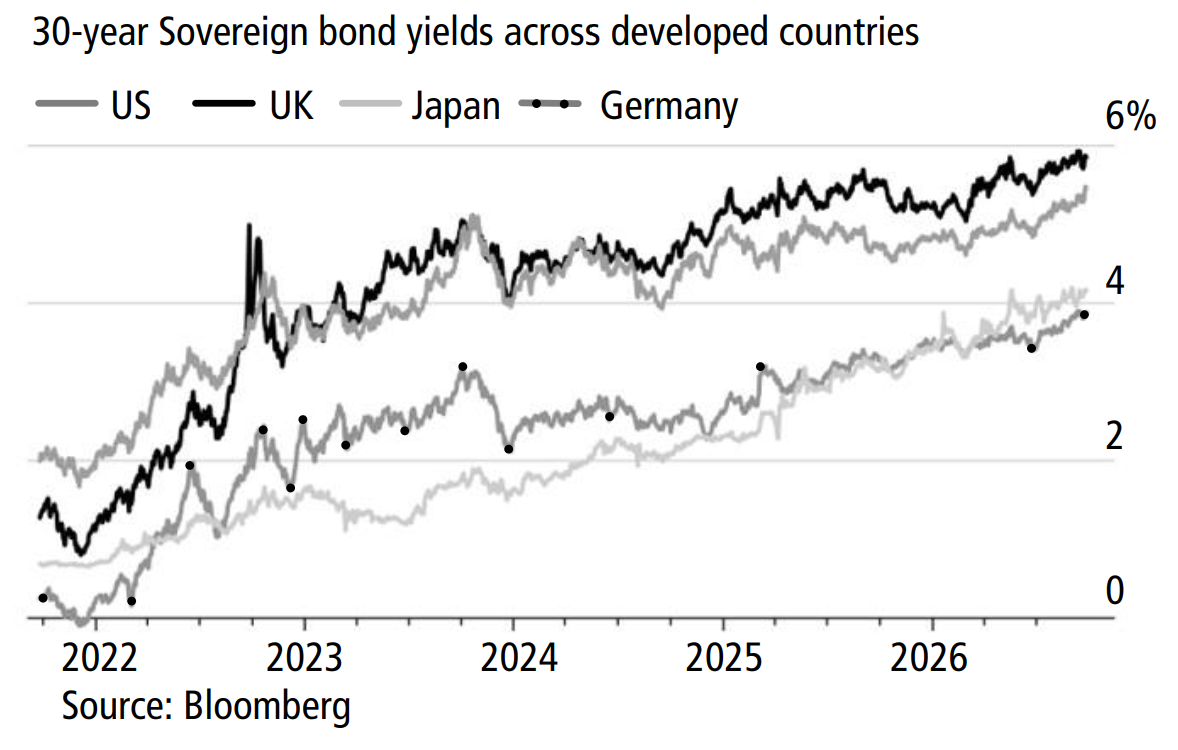
It is worth putting into perspective the trend that preceded the epileptic resumption of production and circulation, the corresponding inflationary SHOCK, and the successive ELECTROSHOCKS administered to the energy sector and capitalist circulation through the military conflicts in Ukraine and Iran — conflicts that have caused spasms which have partially reversed this trend, at least for the time being.
In addition, capitalist States are having to compete with a whirlwind of debt centered on technology companies, which is also driving up returns: “As tech firms seek to expand their AI infrastructure, they are increasingly issuing bonds with longdated maturities so they don’t have to pay back investors for decades. That means governments are facing more competition from corporate debt issuers. Investment-grade companies, including tech giants, have already sold nearly $1.5 trillion of bonds this year, a 36% jump from a year earlier. Nomura Securities estimates that the roughly $200 billion borrowed by the biggest tech firms alone is equivalent to about 25% of the US Treasury’s net issuance of notes and bonds to private investors — five times the share in 2025.” (Bloomberg, 01-09-2026).
The amount of government debt is much greater than what tech companies are issuing, and as we have seen, the gradual rise in government bond yields (i.e., the increase in the cost of refinancing that debt) had already begun with the effects of the epileptic resumption of circulation in 2022. Therefore, while this is not the main cause of the rise in yields, it nonetheless contributes to it and represents an additional problem for governments — and even more so for other companies: “Many companies are forced to tread cautiously around the big tech firms, scheduling their bond issuances to avoid overlapping with those of the tech giants and, according to investors, often opting to borrow at shorter maturities to avoid an oversupply of long-term debt in the market (…) The scale of the borrowing has broken all previous records. Last week, the Japanese conglomerate SoftBank raised more than $11 billion in debt through the largest junk bond issuance in history to finance an investment in OpenAI. (…) This has distorted prices, and high-rated bonds are sometimes trading at a discount to lower-quality issues due to the sudden excess supply.” (Expansión, 12-10-2026).
The race for AI
Major US tech companies are desperately trying to maintain a competitive edge over their Chinese rivals through cross-debt arrangements among themselves to facilitate annual capital investments of 750,000 million. And yet, Chinese companies are hot on their heels to such an extent that it is Chinese imperialism that is now considering how to prevent Western companies from accessing its most advanced technologies:
- “Huawei is set to capture the largest share of China’s AI chip market this year, with sales jumping by at least 60 per cent amid strong demand from Chinese companies seeking domestic alternatives to Nvidia.” (Financial Times, 01-05-2026).
- “Alibaba’s new AI chip (Zhenwu V900), which offers three times the performance of the previous generation, ‘is China’s most powerful AI chip’” (Expansión, 23-09-2026).
- “China’s AI lab Moonshot last week released its Kimi K3 model that exceeded Anthropic’s flagship Opus 4.8 by most of the benchmarks” (Financial Times, 22-07-2026).
- “ByteDance is training an AI model that could approach the size of Anthropic’s most cutting-edge Mythos system, as Chinese companies continue to narrow the gap with the top US labs. The Chinese tech giant is at an early stage of training a model with as many as 10tn parameters — three times larger than Moonshot’s Kimi K3 (…) Mythos 5 has about 8tn parameters and Fable 5 about 5tn.” (Financial Times, 07-08-2026).
All this competition fuels a race to the bottom characterized by excessive debt and investments that render developments obsolete before they can turn a profit, thereby driving down sales prices. Examples:
- “OpenAI recently said that it was slashing prices for GPT-5.6 Luna, its “fastest and most affordable model”, by 80 per cent.” (Financial Times, 14-08-2026).
- ” Anthropic has launched a new AI model, which the startup claims could perform at the same level as its most advanced models, but at a significantly lower cost, to compete with OpenAI and China’s DeepSeek, (…) Anthropic’s new model, Claude Opus 5.5, is about 40% cheaper than its previous version.” (Expansión, 23-09-2026).
This is the mechanism described by Marx in “Wage Labor and Capital” (1849), which inexorably prevails in a profit-driven market society:
“The capitalists therefore find themselves, in their mutual relations, in the same situation in which they were before the introduction of the new means of production; and if they are by these means enabled to offer double the product at the old price, they are now forced to furnish double the product for less than the old price. Having arrived at the new point, the new cost of production, the battle for supremacy in the market has to be fought out anew. (…) This is the law that continually throws capitalist production out of its old ruts and compels capital to strain ever more the productive forces of labour for the very reason that it has already strained them – the law that grants it no respite, and constantly shouts in its ear: March! march!” (Wage Labor and Capital, K. Marx, 1849).
“No matter how powerful the means of production which a capitalist may bring into the field, competition will make their adoption general; and from the moment that they have been generally adopted, the sole result of the greater productiveness of his capital will be that he must furnish at the same price, 10, 20, 100 times as much as before. But since he must find a market for, perhaps, 1,000 times as much, in order to outweigh the lower selling price by the greater quantity of the sale; since now a more extensive sale is necessary not only to gain a greater profit, but also in order to replace the cost of production (the instrument of production itself grows always more costly, as we have seen), and since this more extensive sale has become a question of life and death not only for him, but also for his rivals, the old struggle must begin again, and it is all the more violent the more powerful the means of production already invented are. (…) While competition, therefore, constantly pursues him with its law of the cost of production and turns against himself every weapon that he forges against his rivals, the capitalist continually seeks to get the best of competition by restlessly introducing further subdivision of labour and new machines, which, though more expensive, enable him to produce more cheaply, instead of waiting until the new machines shall have been rendered obsolete by competition.” (Wage Labor and Capital, K. Marx, 1849).
The division of the capitalist world
It is clear from the data we have been reviewing in this and previous issues of “The Internationalist Proletarian” how current Lenin’s analysis in “Imperialism, the Highest Stage of Capitalism” remains, as well as the definition he provided at that time: “(1) the concentration of production and capital has developed to such a high stage that it has created monopolies which play a decisive role in economic life; (2) the merging of bank capital with industrial capital, and the creation, on the basis of this “finance capital”, of a financial oligarchy; (3) the export of capital as distinguished from the export of commodities acquires exceptional importance; (4) the formation of international monopolist capitalist associations which share the world among themselves, and (5) the territorial division of the whole world among the biggest capitalist powers is completed”
We will revisit other aspects of this text in the next issue of the review; but for now, it is worth highlighting the methodological aspect and then delving deeper into how Lenin frames the question of the division of the world — point 5 of his definition of the highest stage of capitalism.
First, the methodological aspect (which makes some really nervous): “To enable the reader to obtain the most wellgrounded idea of imperialism, I deliberately tried to quote as extensively as possible bourgeois economists who have to admit the particularly incontrovertible facts concerning the latest stage of capitalist economy. With the same object in view, I have quoted detailed statistics”. This method — which Lenin did not invent but rather borrowed from Marx’s approach to the study of the development and death of capitalism in “Capital” — is fundamental to the “scientific registration of social phenomena, in order to confirm the fundamental theses of Marxism” (Characteristic Theses, 1951), and we adhere to it without hesitation.
As for the completion of the territorial repartition of the world, it is essential to understand the depth of Lenin’s point. Capitalist powers cannot expand without clashing with one another, without seizing each other’s spheres of influence, without forcing a change in the division of the world. Not only does the repartition of the world not exclude a new repartition, but it actually demands future repartitions, which under capitalism can only occur through covert or open war between imperialist powers.
The following quotes will help clarify the topic:
- “the characteristic feature of the period under review is the final partitioning of the globe — final, not in the sense that repartition is impossible; on the contrary, repartitions are possible and inevitable — (…). For the first time the world is completely divided up, so that in the future only redivision is possible, i.e., territories can only pass from one ‘owner’ to another, instead of passing as ownerless territory to an owner.”
- “The capitalists divide the world, not out of any particular malice, but because the degree of concentration which has been reached forces them to adopt this method in order to obtain profits. And they divide it “in proportion to capital”, “in proportion to strength”, because there cannot be any other method of division under commodity production and capitalism.“
- “Finance capital and the trusts do not diminish but increase the differences in the rate of growth of the various parts of the world economy. Once the relation of forces is changed, what other solution of the contradictions can be found under capitalism than that of force?”
- “In the division of this ‘booty’, an exceptionally large part goes to countries which do not always stand at the top of the list in the rapidity of the development of their productive forces. (...) The question is: what means other than war could there be under capitalism to overcome the disparity between the development of productive forces and the accumulation of capital on the one side, and the division of colonies and spheres of influence for finance capital on the other?”
- the only conceivable basis under capitalism for the division of spheres of influence, interests, colonies, etc., is a calculation of the strength of those participating, their general economic, financial, military strength, etc. And the strength of these participants in the division does not change to an equal degree, for the even development of different undertakings, trusts, branches of industry, or countries is impossible under capitalism. Half a century ago Germany [replace with China] was a miserable, insignificant country, if her capitalist strength is compared with that of the Britain [replace with US] of that time; Japan compared with Russia in the same way. Is it ‘conceivable’ that in ten or twenty years’ time the relative strength of the imperialist powers will have remained unchanged? It is out of the question.
Therefore, in the realities of the capitalist system, and not in the banal philistine fantasies of English parsons, or of the German ‘Marxist’, Kautsky, ‘inter-imperialist’ or ‘ultra-imperialist’ alliances, no matter what form they may assume, whether of one imperialist coalition against another, or of a general alliance embracing all the imperialist powers, are inevitably nothing more than a ‘truce’ in periods between wars. Peaceful alliances prepare the ground for wars, and in their turn grow out of wars; the one conditions the other, producing alternating forms of peaceful and non-peaceful struggle on one and the same basis of imperialist connections and relations within world economics and world politics.”
The development of imperialism leads to war
The post-World War II period saw the culmination of the bourgeois revolutions in Asia and Africa and the extension of capitalism all over the world. This worldwide extension of capitalism has happened, in the economic field, on the basis of the higher phase of capitalism described by Lenin as imperialism. In parallel, in the field of class domination of the bourgeoisie it has developed on the basis of fascism: state intervention in the economy, attempt at centralized world planning and control, integration of the labor union network within the bourgeois State for the control and suffocation of any attempt of workers' struggle, while maintaining in a general way the democratic-parliamentary narcotic.
The period in which the existing imperialist powers battled to prevent the revolutionary irruption of capitalism in their areas of colonial influence, which culminated in the defeat of the US in Vietnam in 1975, was followed by the struggle to stop or slow down the development and interconnection of these new areas of the capitalist world.
It is a phenomenon derived from the tendency of the rate of profit to fall that the younger capitalisms accumulate at a faster rate than the older ones. For this reason, the end of the cycle of post-war reconstruction pushed the capitals of the – older – western imperialisms towards Asia, where they found a higher rate of profit. With this, the Western imperialisms kept the rate of profit afloat while, dialectically, they developed and strengthened their future competitor. The development of the process of capitalist accumulation since then has entailed the displacement of the center of gravity of capitalism towards Asia.
This development has led to the rupture of the post-World War II division of the world since the relative economic weights of the contending powers no longer correspond to those of the time. This rupture of the division of the world is also characterized by the fact that the United States has gradually lost its ability to play the role of world bully, bloodily and criminally accredited at the end of World War II with the bombs on Hiroshima and Nagasaki.
The extension of capitalism worldwide, the end of the cycle of post-war reconstruction and the scrapping of capitalism in the Eastern bloc has been followed by the deepening of the crisis of relative overproduction of capital, which has manifested itself especially since 2008 in the production volcano whose epicenter is in Asia and which floods the world market with commodities, overwhelming its competitors, as well as in a permanent global plethora of idle capital.
The relative crisis of overproduction leads to the necessity of the destruction of idle capitals and of the productive forces already created: “the loss is distributed in very different proportions and forms, depending on special advantages or previously captured positions, so that one capital is left unused, another is DESTROYED, and a third suffers but a relative loss, or is just temporarily depreciated, etc. But the equilibrium would be restored under all circumstances through the withdrawal or even the DESTRUCTION of more or less capital. This would extend partly to the material substance of capital” (Capital, Book III, Chapter XV, K. Marx).
This need for destruction is what leads to military war, regardless of the will of the puppets who delude themselves to rule the world. In all parts of the capitalist world our words are the same as they were in 1920:
"‘Remember the imperialist war!' These are the first words addressed by the Communist International to every working man and woman; wherever they live and whatever language they speak. Remember that because of the existence of capitalist society a handful of imperialists were able to force the workers of the different countries for four long years to cut each other's throats. Remember that the war of the bourgeoisie conjured up in Europe and throughout the world the most frightful famine and the most appalling misery. Remember that without the overthrow of capitalism the repetition of such robber wars is not only possible but inevitable. (...) The imperialist war once again confirmed what was written in the statutes of the First International: the emancipation of the workers is not a local, nor a national, but an international problem." (Statutes of the Communist International, II Congress, 1920).
<<Life of the Party: General Meeting August 2026 (I)